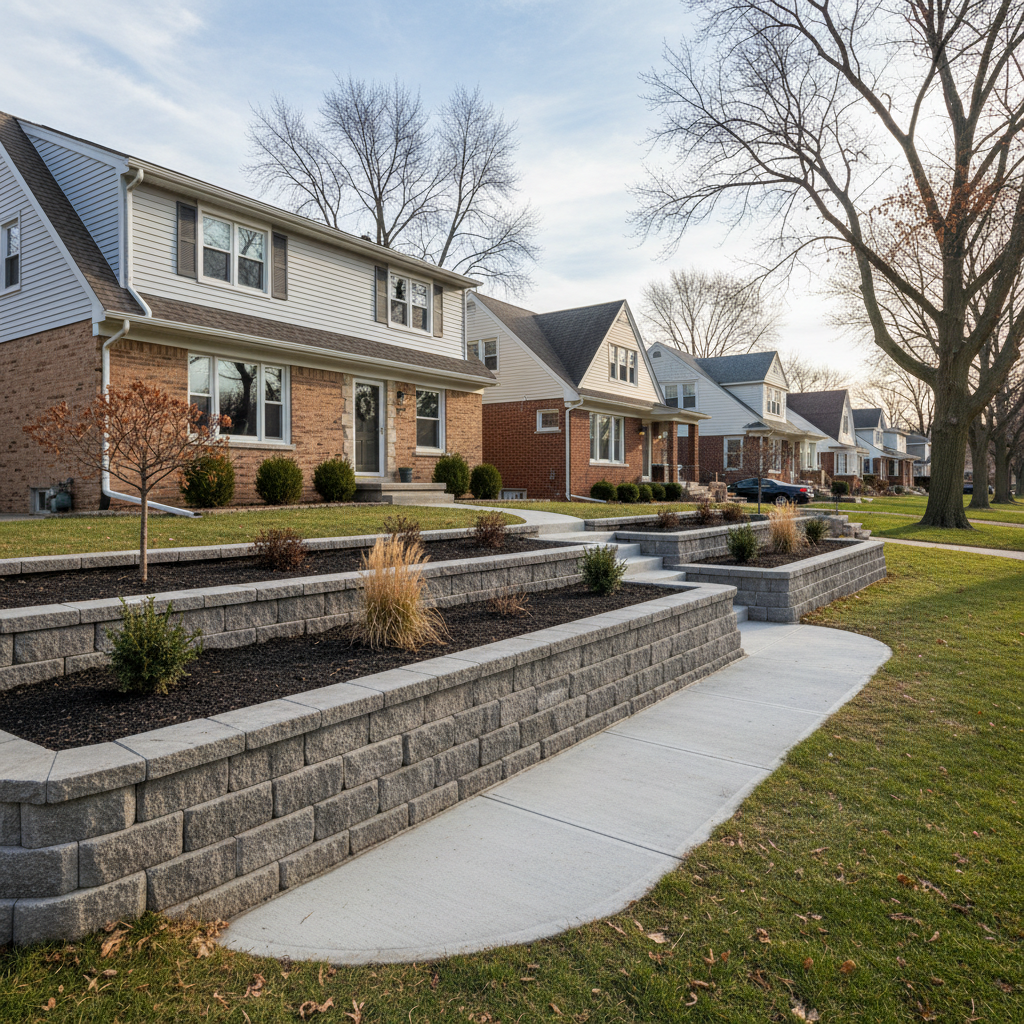
Ever driven through a neighborhood like Lincoln Park or even some of the older parts of Beverly and noticed how some homes just seem to sit perfectly on a sloped lot, while others look like they're fighting gravity? A lot of that comes down to a good retaining wall. And when we're talking about serious earth moving and holding back soil, concrete is often your best bet.
Why Concrete for Retaining Walls in Chicago?
Look, there are other materials out there. Timber, natural stone, even some modular block systems. They all have their place, sure. But for durability, strength, and longevity, especially with Chicago's brutal freeze-thaw cycles, concrete is tough to beat. We've seen timber walls rot out in 10-15 years, particularly if they aren't properly drained. Stone can be beautiful, but it's often more expensive and can shift over time if not installed perfectly. Concrete, when done right, is a fortress.
You're not just building a wall; you're building a structural element that's going to hold back thousands of pounds of soil, water, and sometimes even a neighbor's property. You want something that's engineered to last. That's where concrete really shines. It's not just about pouring a slab, you know? It's about proper footings, rebar, drainage, and backfill.
Common Scenarios for Retaining Walls in Chicago
We see a few recurring situations where homeowners in Chicago need a retaining wall:
- Sloped Yards: This is the most obvious one. If your yard slopes significantly, a retaining wall can create flat, usable terraces for patios, gardens, or play areas. It stops erosion and makes your outdoor space far more functional.
- Creating Usable Space: Maybe you have a walk-out basement and want to create a level patio area outside. Or maybe you're trying to reclaim a strip of land next to a driveway that's always washing out. A retaining wall defines and stabilizes these areas.
- Property Line Challenges: Sometimes, a neighbor's property or an alleyway sits at a different elevation than yours. A retaining wall can clearly define the boundary and prevent soil migration from one property to another. We often see this in older, dense neighborhoods where lot lines are tight.
- Foundation Protection: In some cases, especially with older homes or properties with poor drainage, a retaining wall can divert water away from your foundation. This prevents hydrostatic pressure buildup and potential basement leaks.
The key is to understand the forces at play. You're not just holding back dirt; you're holding back saturated dirt, which is a lot heavier. And in Chicago, with our clay soils, that water doesn't always drain away quickly, adding even more pressure.
The Importance of Local Expertise
This isn't a project you want to trust to just anyone. Why? Because local conditions matter. A company from Arizona isn't going to understand Chicago's specific challenges:
- Freeze-Thaw Cycles: Our winters are brutal. Water gets into cracks, freezes, expands, and then thaws. This can really wreak havoc on poorly constructed walls. Proper drainage behind the wall is absolutely critical to prevent this.
- Clay Soil: Much of Chicago sits on dense clay soil. This stuff holds water like a sponge. When it gets saturated, it expands and exerts tremendous pressure. When it dries, it shrinks. This constant movement needs to be accounted for in the wall's design and construction.
- Permitting and Codes: There are specific city codes and permitting requirements for retaining walls, especially if they're over a certain height or near property lines. You don't want to build something only to find out it's not up to code and has to be torn down.
- Neighborly Relations: Building a wall on a property line can be tricky. A local contractor like Midland Concrete Co. understands how to navigate these conversations and ensure everyone's interests are considered.
When we build a concrete retaining wall, we're thinking about the long haul. We're making sure the footings are deep enough to get below the frost line, that the rebar is correctly placed for maximum strength, and that your drainage system is, well, effective. It's not just about what you see on the surface; it's about what's underneath that makes all the difference.
So, if you've got a slope that's giving you grief, or you're looking to create some truly usable outdoor space, give us a call. We've built plenty of these walls all over the city, and we know what it takes to do it right.