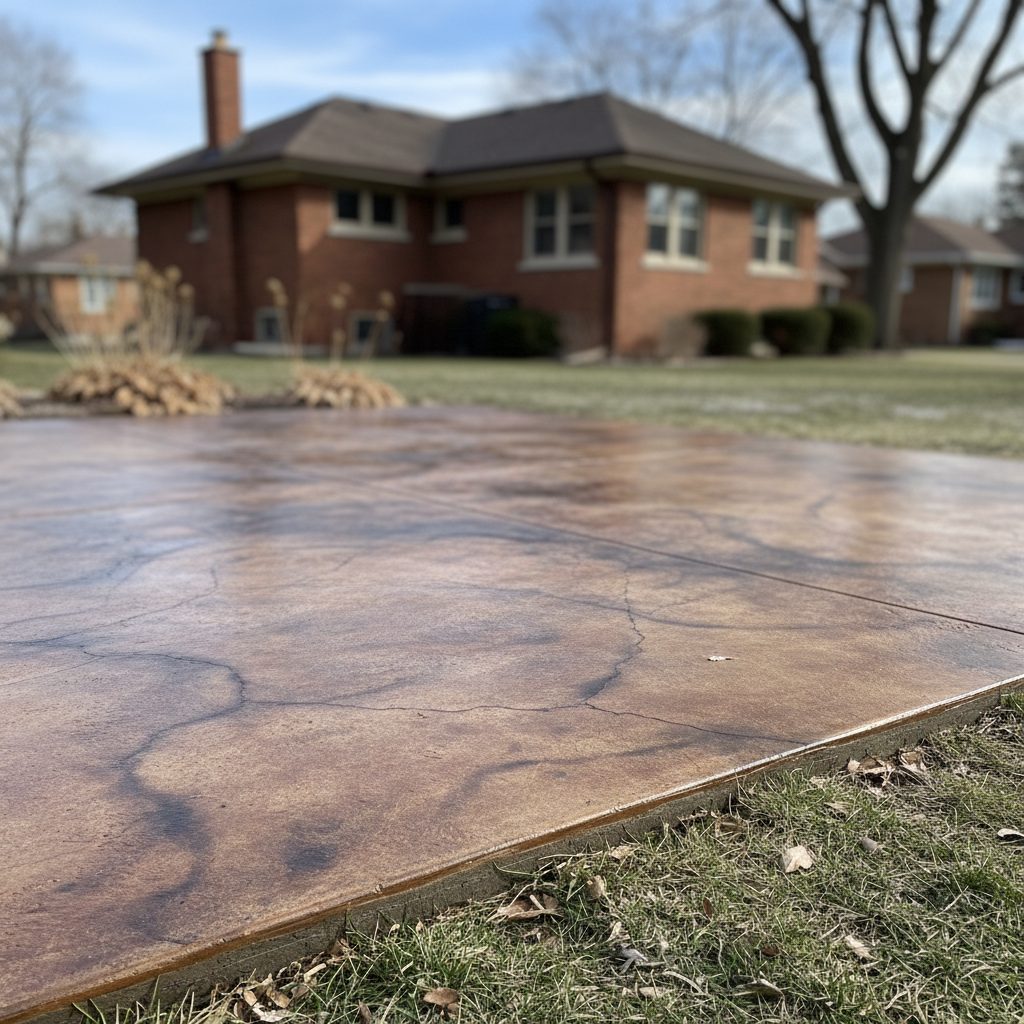
So, you're staring at that plain concrete slab, maybe in your basement or out on the patio, and you're probably thinking, "There's got to be a better way to make this look good." You're absolutely right. Concrete staining can totally transform a dull, boring surface into something genuinely beautiful, adding a depth and character you just won't get with paint. But hold on a second! Before you rush out to buy a gallon of stain, let's chat about what you're really signing up for.
What Exactly *Is* Concrete Staining?
First off, it's not paint. That's probably the most important thing to get your head around. Paint just sits right on top of the concrete. Stain, especially the acid-based kind, actually reacts with the minerals already in the concrete itself. This chemical reaction creates a translucent, mottled, and permanent color — one that won't chip, peel, or fade away like paint often does. Water-based stains work a little differently; they penetrate the surface to create a more opaque, uniform color, but even these don't form a film on top. The really cool part about acid stain? Every slab reacts uniquely, so you end up with a one-of-a-kind finish. It's almost like a fingerprint for your floor, isn't it?
Before You Even *Think* About Staining
Preparation is absolutely everything. I honestly can't stress this enough. If you cut corners here, your stain job will look terrible, and you'll be kicking yourself later. First things first, you need to know what kind of shape your concrete is in. Is it brand new? Really old? Has someone sealed it before? Or painted it? Any cracks or spalling? Stains won't hide imperfections; often, they'll make them stand out more. So, if your concrete is looking a bit rough, you'll definitely need to fix it first. That means patching up cracks, grinding down any high spots, and making sure the surface is solid and sound.
- Clean, Clean, Clean: This isn't something you can skip. The surface has to be spotless. No dirt, no grease, no old paint, no sealers. If there's anything left on the surface, the stain won't penetrate evenly, and you'll end up with splotches or spots where the stain didn't take at all. For indoor projects, a good degreaser and a thorough scrub usually do the trick. If you're working on an outdoor patio or a garage floor, you might need a pressure washer and a stronger cleaner to really get it ready.
- Moisture Check: Your concrete needs to be dry. And I mean *really* dry. If you're tackling a basement, especially in an older Chicago home where moisture can be a real headache, you absolutely have to do a moisture test. Just tape a 2x2 foot piece of plastic sheeting to the floor for 24 hours. If you see condensation underneath it, you've got a moisture problem that needs fixing before you even think about staining. Otherwise, the stain won't stick right, and you'll run into issues down the road.
- Test Area: Always, always, always do a test patch in a spot no one will notice. This lets you see exactly how the stain will react with your specific concrete and gives you a chance to tweak your technique or even your color choice.
DIY or Call Midland Concrete Co?
Okay, this is where things get real. If you're looking at a small, pretty clean, unsealed concrete patio or a basement floor that's in decent shape, and you just want a simple, single-color application, you *can* probably handle it yourself. It's definitely labor-intensive, and you'll need to be super careful with the prep, but it's doable. You'll need safety gear (gloves, eye protection, a respirator), a sprayer, brushes, and a whole lot of patience.
However, if your concrete is old, has existing coatings, needs major repairs, or if you're dreaming of intricate designs, multiple colors, or a truly high-end finish, that's when you bring in the pros. We've got the specialized equipment for grinding, cleaning, and applying stains evenly. We also know how different concrete mixes react, and we've got the experience to troubleshoot unexpected issues. Plus, dealing with acid stains means proper handling and neutralization, which isn't something you want to mess up. For a complex job, honestly, it's just not worth the headache or the potential for a botched job that'll cost a fortune to fix. Think about it: if you're staining your entire basement floor, you want it to look good for years, right?
During the Staining Process
Whether you go the DIY route or hire us, the actual application is pretty straightforward once all that prep work is done. You'll apply the stain in thin, even coats. For acid stains, you let it react for a few hours, sometimes longer, then neutralize and clean the surface thoroughly. Water-based stains usually mean applying, letting it dry, and then often adding a second coat. The main thing is even coverage and avoiding puddles, which can lead to darker, uneven spots. Work in small, manageable sections, and you'll be fine.
After the Stain: Sealing and Maintenance
Once the stain is completely dry and clean, you absolutely, positively have to seal it. This step isn't optional, folks. The sealer protects the stain from wear, abrasion, and moisture, and it really makes the color and depth pop. There are different types of sealers out there – acrylics, epoxies, urethanes – each with different properties and finishes (matte, satin, gloss). Pick one that's right for your situation, whether it's indoors or outdoors, high traffic or low. What makes sense for your garage floor might not be right for your living room.
After sealing, maintenance is pretty simple. For interior floors, regular sweeping and mopping with a mild, non-abrasive cleaner is usually all you'll need. For exterior surfaces, an occasional cleaning with a hose and a soft brush will keep it looking great. You'll probably need to reapply a sealer every few years, especially on outdoor surfaces that get hit by our harsh Chicago winters and those freeze-thaw cycles. That constant expansion and contraction can be really tough on any concrete finish.
Stained concrete is a fantastic, durable, and beautiful option for many homes. Just make sure you go into it with your eyes wide open about the work involved, and don't be afraid to call a local expert like us at Midland Concrete Co if you're feeling overwhelmed. We're always happy to chat through your project ideas.