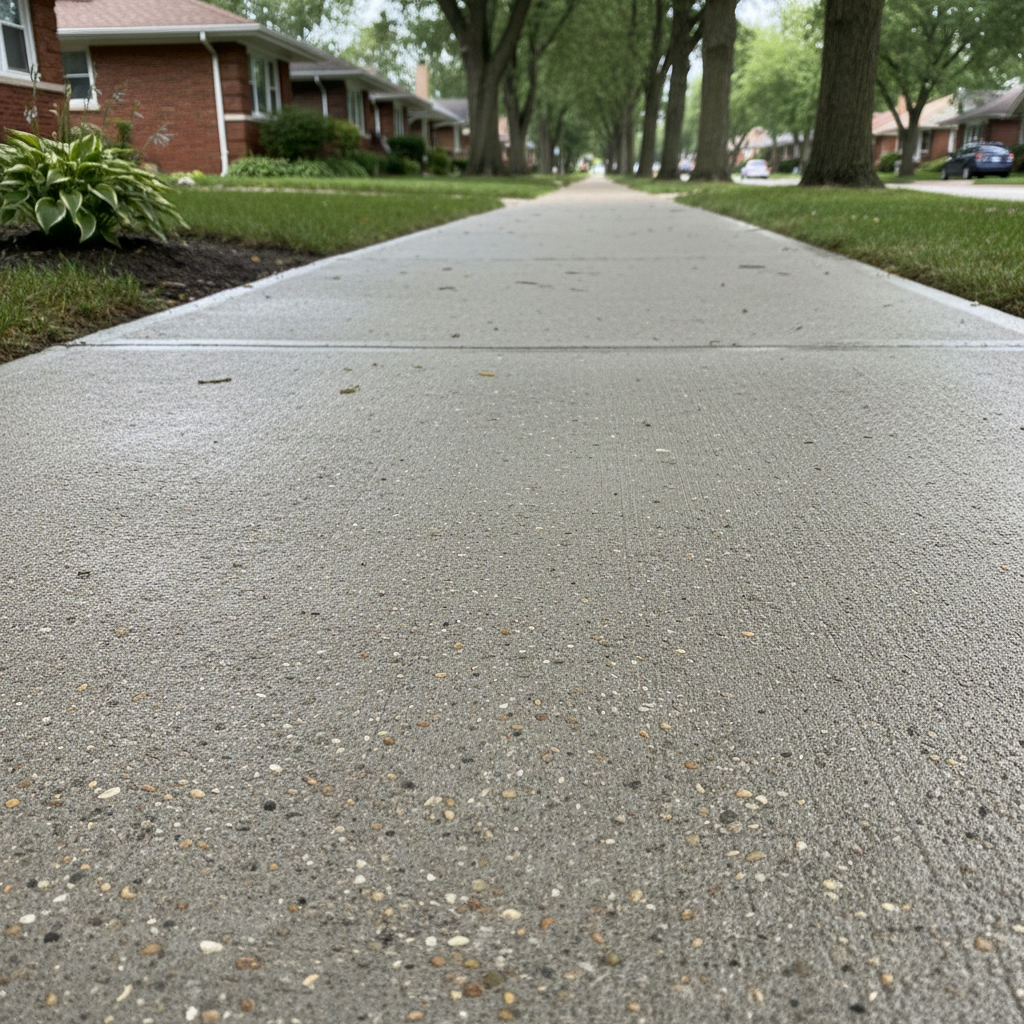
Before You Start: Planning Your Sidewalk Project
So, you're looking at that cracked-up path to your front door, huh? Or maybe you're thinking about adding a new walkway around the side of your house. A concrete sidewalk is a really solid, long-lasting investment, but you absolutely have to plan it out right. First things first: what's it actually for? Is it just for people walking, or will you be rolling a heavy grill or trash cans over it? That'll tell you how thick the concrete needs to be.
Next, you've got to check in with the City of Chicago. Seriously, don't skip this step. You might need a permit, especially if your new path connects to a public sidewalk or if you're working within the public right-of-way. You definitely don't want to pour a beautiful new path only to have the city make you rip it out later. Also, make sure to call 811 before you dig – it's free, and it'll save you from hitting gas lines, water pipes, or electrical conduits. Trust me, that's a headache you absolutely want to avoid.
Now, let's talk about doing it yourself versus hiring someone. For a small, simple path – say, a 2-foot wide, 10-foot long walkway just for light foot traffic – you might be able to handle it. But if you're talking about a longer, wider sidewalk, or anything that needs to hold up to more weight, or if your yard has a slope, you're probably better off calling a pro. Concrete work looks easy from the outside, but there's a lot of skill involved in getting it level, sloped correctly for drainage, and finished just right.
The "During" Phase: Execution and What to Expect
Alright, let's say you're going for it yourself. You'll need to excavate the area first. You want to dig down deep enough to allow for a few inches of compacted gravel base, plus the concrete thickness itself. For most residential sidewalks, we're talking 4 inches of concrete, so you might dig 6-8 inches total. Make sure your base is level and well-compacted. This is super important for preventing cracks down the road, especially with our freeze-thaw cycles here in Chicago. If your soil is that heavy, sticky clay we see a lot of in places like Lincoln Park or Logan Square, you'll really want to make sure that base is solid and drains well.
Forming is next. You'll use wood or metal forms to create the shape and height of your sidewalk. Make sure they're sturdy and staked well, because wet concrete is heavy, and it'll push those forms out if they're not secure. You also need to plan for expansion joints every 5-8 feet; these allow the concrete to expand and contract without cracking. Oh, and don't forget a slight slope for drainage – about 1/8 inch per foot is usually enough to shed water without being noticeable.
Mixing and pouring concrete is where it really gets tough for a DIYer. If you're mixing bags, that's a lot of physical labor, and you've got a limited amount of time before it starts to set. If you order a ready-mix truck, you need to be prepared to work fast. Screeding (leveling the concrete) and floating (smoothing it out) take practice. If you don't get it right, you'll have an uneven, rough surface that won't look good or last as long. This is where Midland Concrete Co. really shines – we've got the tools and the crew to get it done efficiently and correctly, no fuss.
After the Pour: Curing and Care
Once the concrete is poured and finished, the work isn't over. Curing is probably the most overlooked part of DIY concrete projects, and it's absolutely essential for strength and durability. You need to keep the concrete moist for at least 3-7 days, ideally longer. This means covering it with plastic sheeting, burlap, or using a curing compound. Don't let it dry out too quickly, especially on a hot, sunny Chicago day, or it'll be weaker and more prone to cracking later on.
Keep traffic off it for at least 24-48 hours for light foot traffic, and a full week for anything heavier. For vehicles, you're looking at 28 days for full strength. Be patient! Once it's cured, your new sidewalk should last you decades. Regular cleaning and sealing every few years will help protect it from our harsh winters and keep it looking good. If you see any small cracks developing, address them quickly to prevent water from getting in and making them worse. A little maintenance goes a long way in extending the life of your concrete.