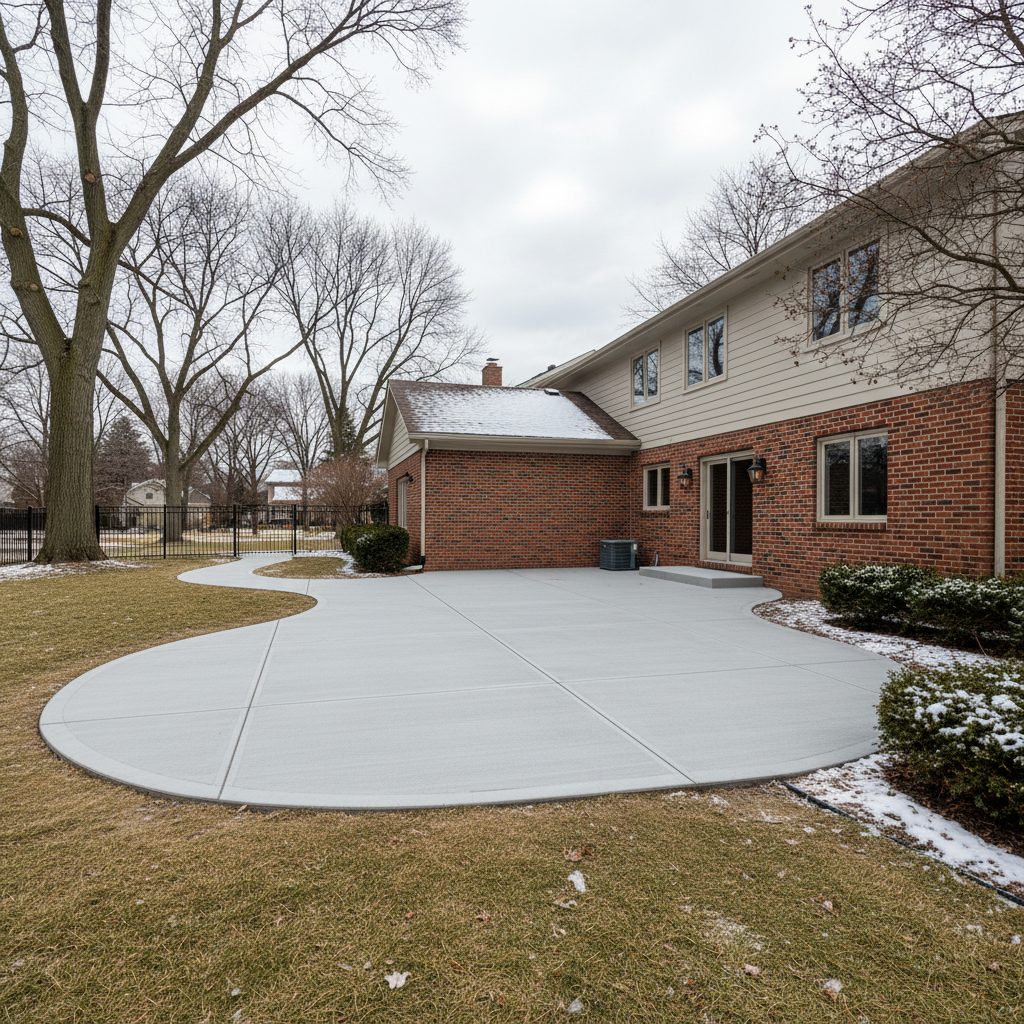
If you have lived through a Chicago winter, you already know our weather does not mess around. Midland Concrete Co. spends a lot of time talking homeowners out of bad timing and into smart scheduling. Concrete is not just about mixing and pouring; concrete is a chemical reaction that is deeply sensitive to the brutal swings in temperature we get right here in Cook County, Illinois.
Timing Your Project Around the Chicago Climate
Spring can bring endless rain and saturated clay soil that shifts underneath a heavy subgrade. Pouring a new concrete driveway or a concrete patio when the ground is still thawing out from a hard winter is a recipe for uneven settlement and cracking down the road. Summer gives us great production days, but scorching July heatwaves can dry out a fresh concrete pour way too fast, leading to shrinkage cracks before the concrete slab even has a chance to set.
Late spring and early autumn usually offer those sweet-spot temperatures between 50 and 70 degrees where concrete cures properly and reaches its true design strength. Fall is fantastic because the cooler air slows down moisture evaporation, but you still have to watch out for sudden overnight frost warnings across Chicago.
What Happens When Weather Goes Sideways
If you catch a sudden freeze before your new concrete hits that critical early strength threshold, the water inside the mix expands. That ruins the internal matrix and can slice your ultimate concrete slab strength in half. That is why cold-weather concreting requires special admixtures, heated water, or insulated blankets. On the flip side, baking sun and dry lake winds demand windbreaks, fogging, or specific curing compounds to keep the concrete surface from crusting over prematurely.
Protecting Your Investment All Year Round
Once your concrete is safely cured, Midland Concrete Co. reminds you that you still have to defend it against our seasonal punishment. Freeze-thaw cycles combined with local deicing salts will chew up unprotected flatwork faster than almost anything else in Chicago. Keep your concrete surfaces clean, skip the harsh chemical rock salt during winter storms in favor of sand or pet-safe alternatives, and apply a breathable penetrating sealer every couple of years to keep moisture out of the pores.