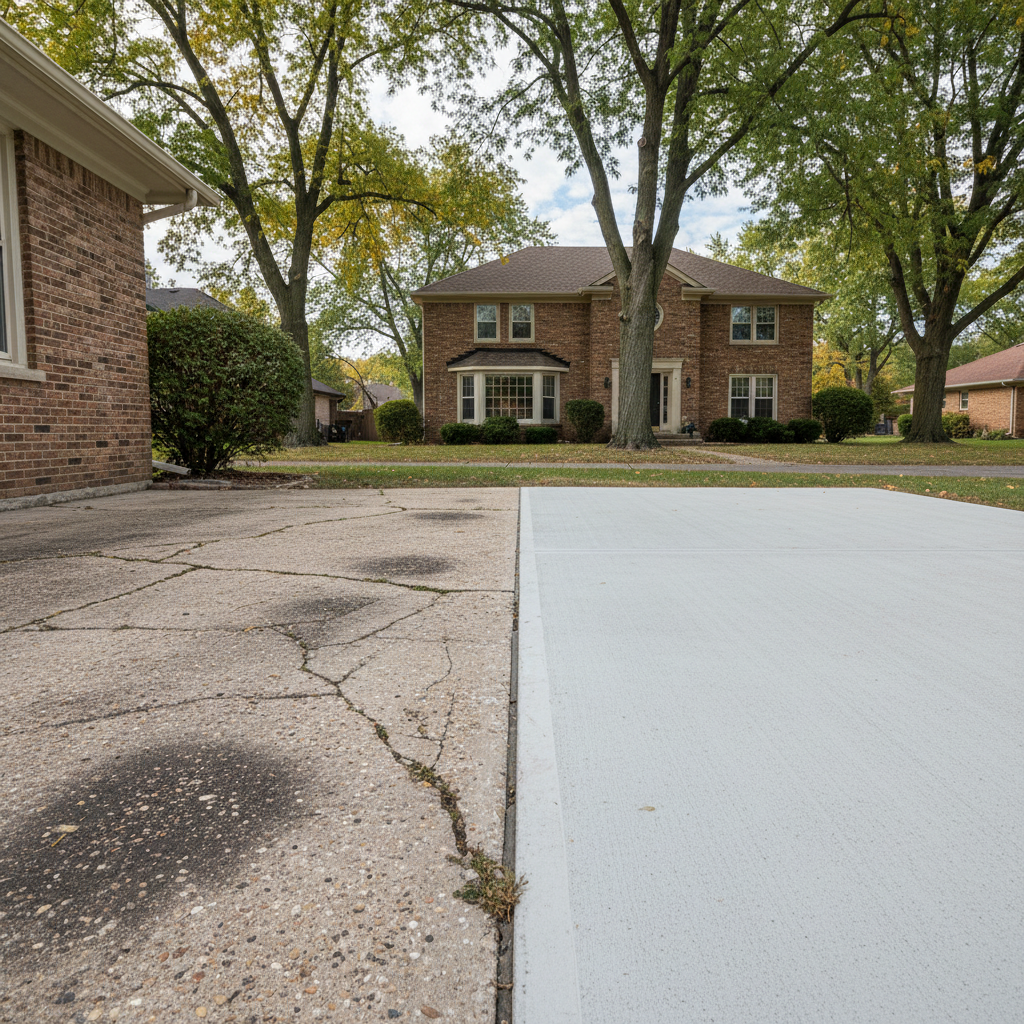
So, you're thinking about a new patio, maybe a walkway, or even a foundation for that backyard shed. When it comes to concrete, you've really got two main choices: we can pour it right there on your property, or we can bring in precast concrete slabs. Both options get the job done, sure, but they're pretty different animals, especially when you're up against Chicago's notorious weather and tricky soil.
Poured Concrete: The Tried-and-True Method
This is probably what pops into most people's heads when you say 'concrete.' We mix it up on-site, pour it into forms we've built, and then finish it right there. It's a classic for a reason, you know?
- Cost: For bigger areas, poured concrete usually costs less per square foot. You're paying for the material, the crew to form and pour it, and then the finishing touches. There's just less fussing with individual pieces compared to slabs.
- Durability & Strength: When it's done right, poured concrete is incredibly strong and built to last. You end up with one solid, monolithic slab – that means it's a single, continuous piece. This really cuts down on joints where water can sneak in and cause trouble, which is a huge deal with our freeze-thaw cycles here in Chicago. A properly reinforced poured slab can take a serious beating.
- Appearance & Customization: This is where poured concrete truly shines. You can get pretty much any shape you can imagine – curved patios, twisty walkways, whatever fits your yard. We can even add color to the mix, or do different finishes like a super smooth trowel, a broom finish (great for traction, by the way), or even exposed aggregate (though I've talked about that before). It's really custom-made for your space.
- Maintenance: It's pretty straightforward. Keep it clean, seal it every few years, and deal with any cracks quickly. Since it's one big piece, if a section does crack, that crack can sometimes spread further than it would with individual slabs.
- Installation Time: It takes a bit of time to get the base ready, set the forms, pour, and then let it cure. You're generally looking at a few days of work for the install itself, plus a week or more for it to cure enough before you can really put it to heavy use.
Precast Slabs: The Modular Approach
Precast slabs, sometimes people call them pavers or concrete tiles, are made somewhere else, usually in a factory under controlled conditions. We then bring them to your place and lay them down, typically on a prepared gravel base.
- Cost: For smaller jobs or really detailed designs, precast can sometimes be competitive. But for bigger, simpler areas, the cost per square foot often climbs because you're paying for each piece to be made individually, plus all the labor to lay them. Fancy or super-large slabs can get expensive in a hurry.
- Durability & Strength: Each individual slab is strong, but the whole system depends on how good the base is and the joints between them. They're designed to give a little, which can be good for minor ground shifts. However, those joints are perfect spots for weeds to sprout, and over time, individual slabs can settle unevenly if the base isn't prepped perfectly. That can lead to tripping hazards, and nobody wants that.
- Appearance & Customization: You're basically limited to the shapes and sizes the manufacturer produces. While there's a huge range of colors, textures, and patterns out there, you won't get that seamless, flowing look of a poured slab. You'll always have those joint lines, won't you?
- Maintenance: This is a bit more involved than poured concrete. You'll need to re-sand or re-grout those joints every so often to keep weeds out and maintain stability. If one slab gets messed up, you can just swap that one out, which is a plus. But if the base settles unevenly, you might have to lift and re-level whole sections.
- Installation Time: Generally, it's quicker to lay once the base is ready, since there's no curing time on-site. You can usually walk on it almost right away.
The Midland Concrete Co. Recommendation for Chicago
Look, for most residential projects here in Chicago – patios, driveways, sturdy walkways – I'm going to lean towards poured concrete every single time. Our climate, with its brutal winters and those constant freeze-thaw cycles, really puts concrete through its paces. A well-installed, monolithic poured slab with proper rebar and control joints just handles these stresses so much better than a system of individual slabs with dozens of joints, don't you think?
We've seen countless precast paver patios in neighborhoods like Lincoln Park or Lakeview start to heave and settle unevenly after just a few winters. Why? Because water gets into those joints, freezes, and pushes everything around. With poured concrete, you get a stronger, more stable surface that's built to last through those harsh conditions. Plus, you get that smooth, custom look that just feels more permanent and high-quality.
Precast definitely has its place, especially for decorative touches or permeable surfaces, but for a solid, long-lasting investment in your home's exterior, poured concrete is usually the smarter bet here in the Windy City. It's a foundational choice, and you want that foundation to be as strong as possible, right?